.D8PcmjWh_Z1Ajpfu.svg "1979 Dollar Coin Value")
Introduction
The 1979 dollar coin value, popularly known as the Susan B. Anthony dollar, holds a special place in numismatic history. Striking a unique balance between rarity and availability, this coin presents a fascinating subject for both seasoned and novice collectors. While its initial release intended to commemorate a leading figure in women’s rights, the 1979 dollar coin today intrigues various coin enthusiasts who are keen to explore its design, mintage, and value.
| Specification | Detail |
|---|---|
| Denomination | 1 Dollar |
| Composition | Copper-Nickel Clad |
| Diameter | 26.5 mm |
| Weight | 8.1 grams |
| Designer | Frank Gasparro |
With a mintage over 757 million across multiple facilities, the 1979 dollar coin saw widespread production. Still, various factors like condition, mint mark, and error varieties greatly influence its value in today’s collector market, and collectors can assess them using a free coin identifier app or a free coin scanner app.
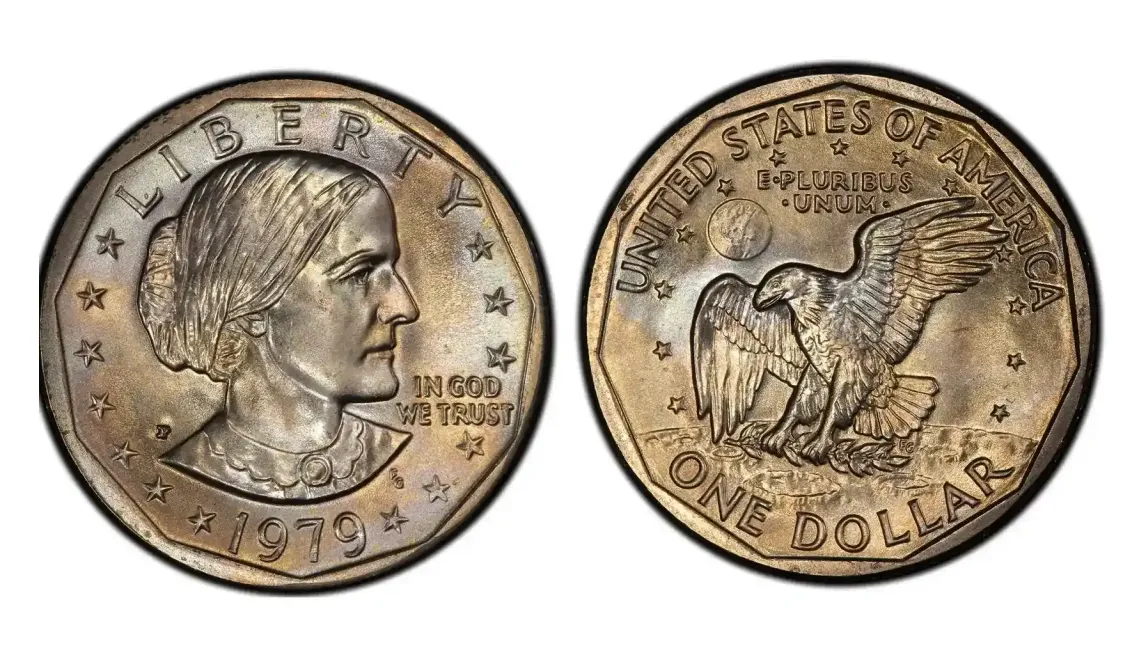
1979 Dollar Coin Value
Price Disclaimer
Values presented here represent approximate retail ranges for typical market transactions and may vary by grade, grading service, auction results, and local demand.
Value Table
| Condition | Average Value (USD) |
|---|---|
| Circulated | $1.00 – $2.00 |
| Uncirculated (MS60–MS66) | $2.50 – $8.00 |
| High-Grade Uncirculated (MS67+) | $300 – $500 |
| Proof – Clad (proof mint) | $4.00 – $15.00 |
| Error Coins | Varies with error type |
Factors That Influence the Value
Mint Mark and Mintage The mint mark, located near the date on the obverse, significantly influences the value of the 1979 dollar coin due to production numbers at different mints. Coins from the Philadelphia (no mint mark), Denver (D), and San Francisco (S for proof issues) have varying rarities.
Condition and Grade Condition directly affects market value, with coins assessed using the Sheldon Scale, where 70 represents a perfect coin. Higher grades, especially those above MS67, can command higher prices due to their exceptional preservation.
Metal Composition The 1979 dollar coins were minted in copper-nickel clad, making them less valuable than silver issues, although very rare silver proofs were created as collector items.
Errors and Varieties Certain mint errors attract a premium for their rarity and uniqueness. Examples include die breaks and doubling. Authenticating and grading these errors through renowned services such as PCGS and NGC is crucial to validating their market value.
Rarity and Errors of the 1979 Dollar Coin Value
The 1979 dollar coin, featuring Susan B. Anthony, is a popular interest point for collectors due to its unique place in numismatic history. While not all 1979 dollar coins carry significant value, certain errors and varieties can indeed draw substantial attention and higher prices from enthusiasts.
Known Errors and Their Values
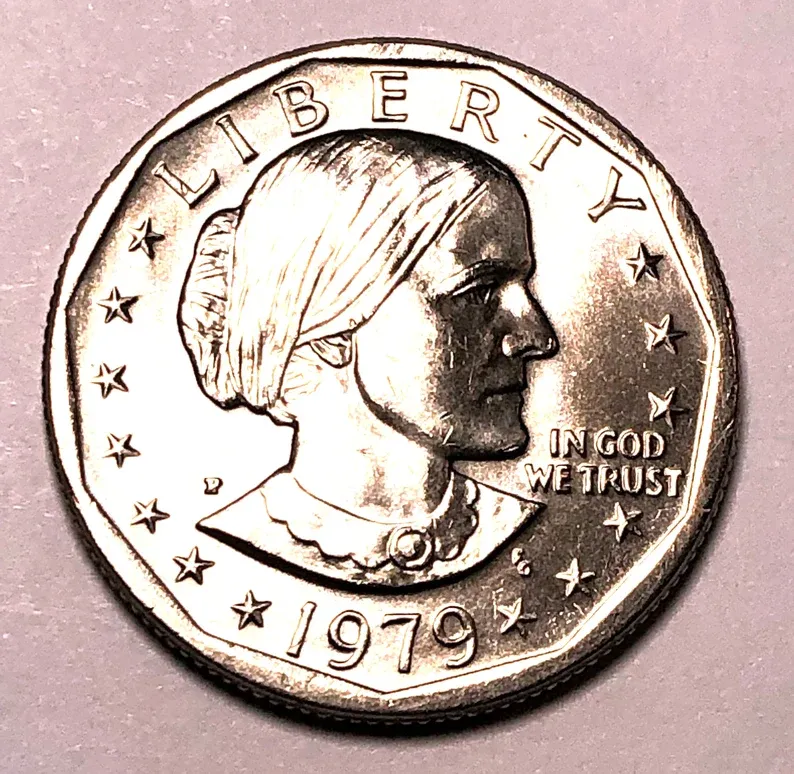
Wide Rim Error (Type 1) This striking error occurs when the coin’s rim is broader than usual, often perceived due to a distinct gap between the date and the rim. It is identifiable by its more pronounced border, especially on Philadelphia-minted coins.
- Estimated Value: $35 – $75+
- Rarity Level: Uncommon
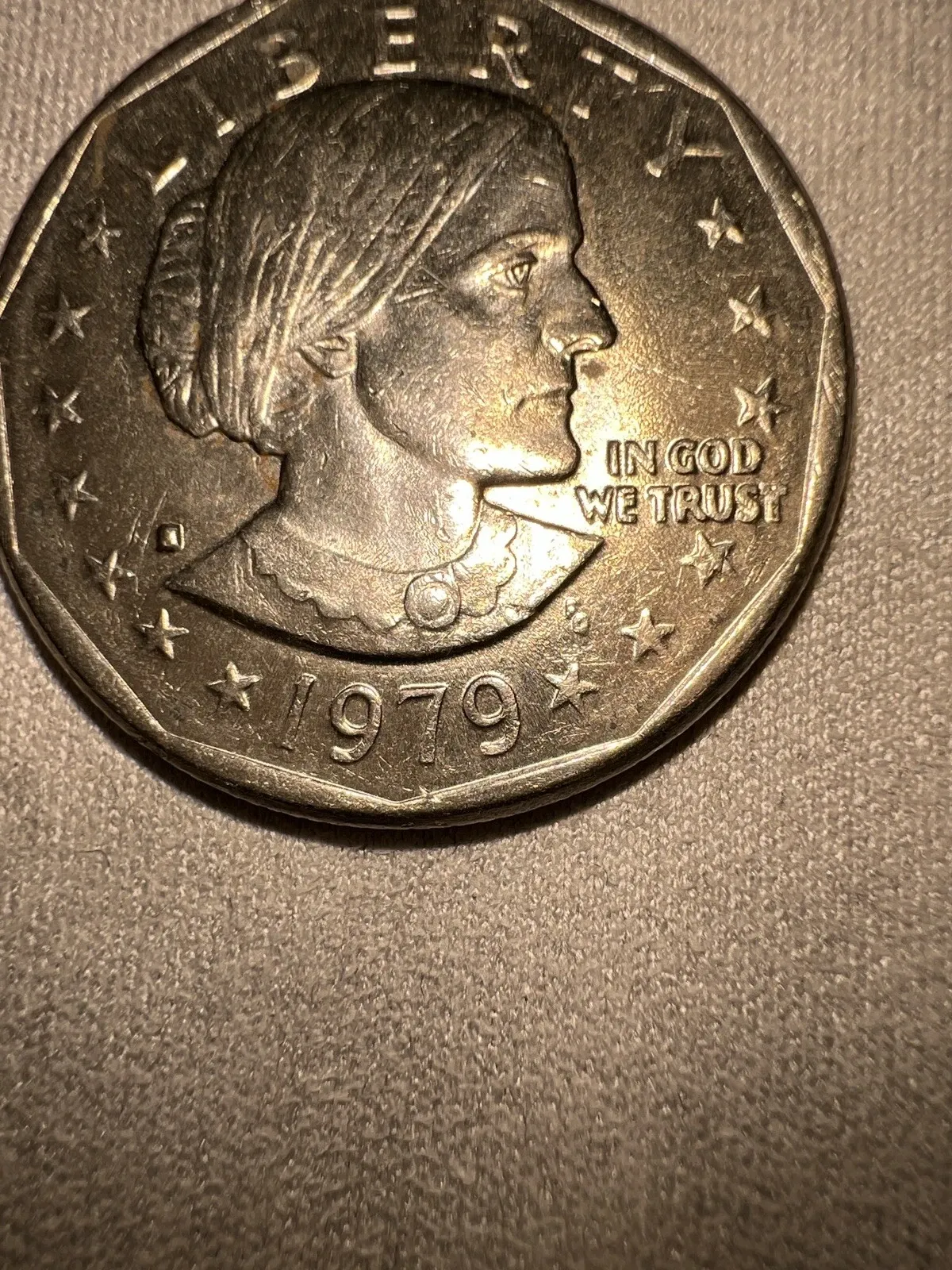
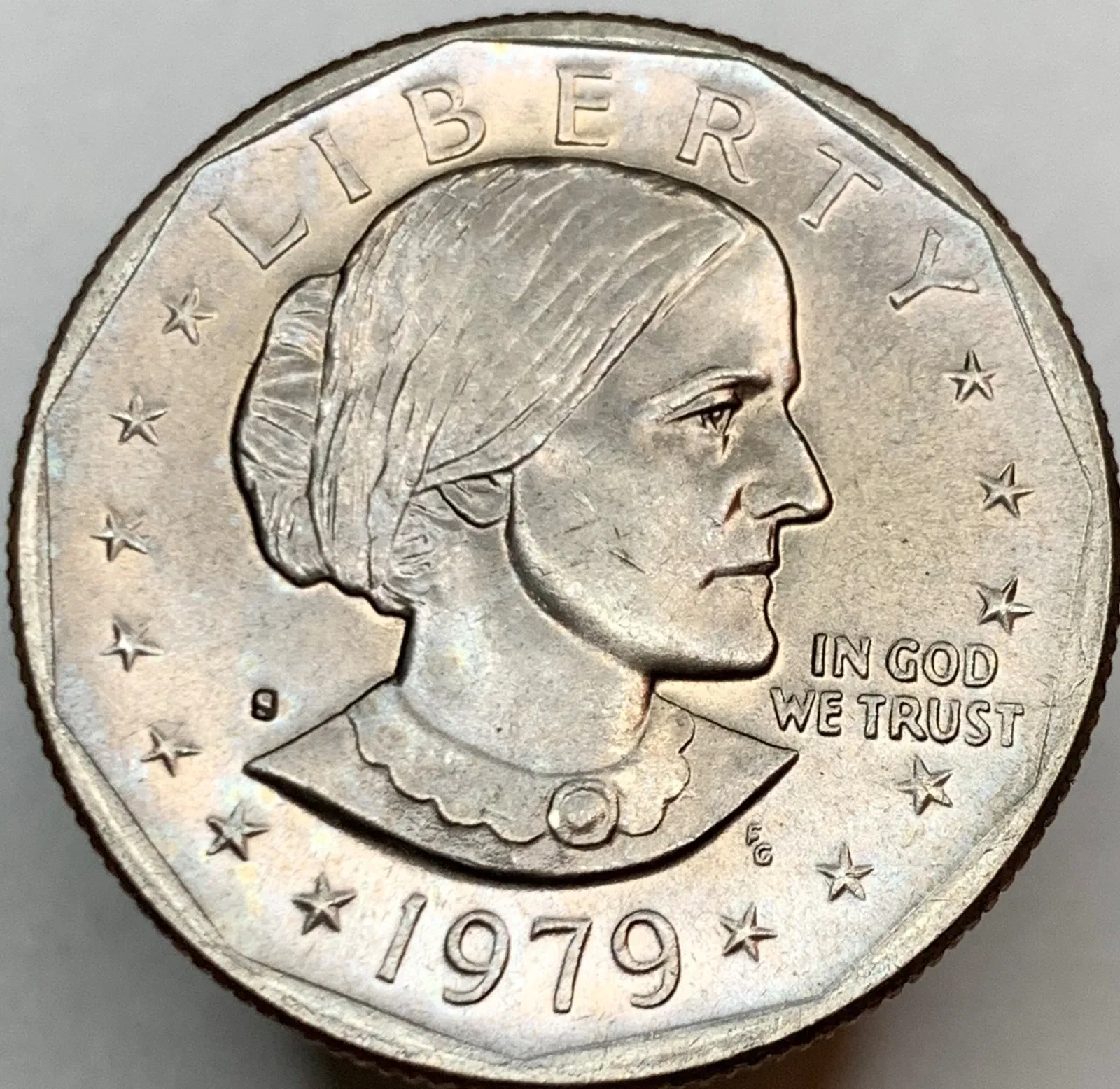
1979-S Type 2 Proof Error A classic variety, this distinction arose from a modified mint mark die, resulting in a flatter and more circular ‘S’ mint mark that differs from the Type 1 more bulbous form.
- Estimated Value: $200 – $300+
- Rarity Level: Rare
Filled ‘S’ Mint Mark Error Here, parts of the ‘S’ mint mark appear to be filled in or blurred, a result of debris or grease-filled die during production.
- Estimated Value: $50 – $150+
- Rarity Level: Common
Price Impact Summary
Minor Errors: Small die chips or light defects typically affect the coin’s value minimally, as these are relatively common occurrences in minting.
Major Errors: Dramatic deviations, such as doubled dies or planchet errors, hold significantly higher value due to their rarity and visual distinctiveness.
Condition Impact: Higher Mint State grades (MS67 and above) drastically increase the value of error coins, owing to their pristine condition, which enhances the error’s visibility and desirability.
Authentication: Third-party verification by reputable services like PCGS or NGC is critical. It enhances trust and can significantly affect a coin’s marketability and final sale price.
Mint Marks & Mintage
Understanding the mint marks of the 1979 dollar coin is crucial for collectors aiming to determine the scarcity and value of their collection. Each mint mark tells a unique story of where and when the coin was produced.
Mint Mark Locations
The 1979 dollar coin featured different mint marks that denote its origin from various U.S. mint facilities. Typically located above the shoulder on the obverse side, mint marks like “P” (Philadelphia), “D” (Denver), and “S” (San Francisco) can significantly impact a coin’s desirability among collectors.
Mintage Numbers
Below is a table describing the mintage numbers for each mint, offering insight into the coin’s production volume. Remember, these figures help establish the relative rarity of the coins, a critical factor in determining their value.
| Mint Location | Mint Mark | Mintage (millions) |
|---|---|---|
| Philadelphia | P | 360.2 |
| Denver | D | 288.0 |
| San Francisco | S/Proof | 3.7/3.6 |
While Philadelphia produced the majority of these coins, the proof issues from San Francisco are often deemed more collectible due to their lower mintage and premium finishing.
Scarcity and Collectibility
Mintage figures are not the sole determinants of value; the presence of unique features, such as mint errors or proof quality, greatly enhances a coin’s appeal. Collectors should also consider the role of special editions, like the “S” mint proofs, when assessing the overall worth of the 1979 dollar coin.
For more insights on how mint marks and production affect your coins, explore other sections on our site that delve into the significance of mint errors or proof quality in numismatic value.
1979 Dollar Coin Value Facts and Trivia
Design Details
Obverse: The 1979 Dollar Coin prominently features a portrait of Susan B. Anthony, a celebrated leader in the women’s suffrage movement. The bust is oriented to the right and is surrounded by thirteen stars, representing the original colonies.
Reverse: The reverse side showcases an American eagle landing on the Moon, an image inspired by the Apollo 11 mission insignia. It also includes the Earth in the background, emphasizing the global significance of the Moon landing.
Inscriptions: “LIBERTY,” “IN GOD WE TRUST,” “1979,” and the United States motto “E PLURIBUS UNUM.”
Release Information
Release Date: July 1979
Series Context: The 1979 dollar coin marked the beginning of the first-ever designed series for a woman on a circulating U.S. coin, signifying a historical turn in U.S. numismatics.
Historical Significance: The coin honors Susan B. Anthony as a pivotal figure in obtaining voting rights for women, representing a milestone in American societal progress.
Quick Facts
- The Susan B. Anthony dollar was the first U.S. coin to feature a real woman rather than an allegorical female figure like “Liberty.”
- Despite its innovative design, the coin was not immediately popular due to its size, which was often confused with the quarter.
- Known collectors’ nickname for the Susan B. Anthony dollar series is “Susie B’s.”
For further insights into collecting the 1979 dollar coin and accessing helpful tools, visit the Coin ID Scanner App on iOS or Android.
Collecting the 1979 Dollar Coin
Understand the Basics: Before diving into collecting the 1979 dollar coin, familiarize yourself with its characteristics and historical context. The coin marks the first year of the Susan B. Anthony dollar series, a significant numismatic milestone due to its unique size and design.
Evaluate Mint Marks and Variations: Investigate the various mint marks—Philadelphia (no mark), Denver (D), and San Francisco (S)—as these can influence the coin’s rarity and value. Be on the lookout for any special varieties or errors that can add to the coin’s desirability.
Assess Condition Accurately: Use the Sheldon Scale to determine and evaluate the grade of your coins, focusing on details like luster, strike, and presence of wear. High-grade uncirculated coins, such as MS67+, can command premium prices in the market.
Focus on Error Varieties: Collecting coins with verified mint errors like die breaks or double-die obverses can be particularly rewarding. Authenticate these discoveries through trusted numismatic graders for maximum value confirmation.
Stay Updated on Market Trends: Keep an eye on the numismatic market and regularly check auction sites for 1979 one dollar coins. This will help you understand the current demand and pricing trends, guiding future purchases.
Join Numismatic Communities: Engage with coin collecting clubs, online forums, or local gatherings. Such communities offer valuable insights, expert advice, and the chance to exchange coins or purchase rare finds.
Use Technology Wisely: Enhance your collection efforts with technology by using tools. These apps assist in recognizing and evaluating coins, making informed collecting more accessible and accurate.
Understanding the 1979 Dollar Coin Value
For many collectors in the United States, the 1979 one dollar coin holds a special place in numismatic history. Known as the Susan B. Anthony dollar, this coin marks a significant point where an innovative yet controversial design was unveiled. Understanding the 1979 dollar coin value involves exploring its historical background, the variations in its minting, and the unique factors that increase its value over time.
History of the 1979 Dollar Coin
In 1979, the U.S. Mint introduced the Susan B. Anthony dollar, a unique endeavor to replace the cumbersome Eisenhower dollar. Representing an influential American social reformer, Susan B. Anthony, the coin was intended to make the one-dollar denomination more practical for daily use, although it bore a striking resemblance to the quarter, which led to its limited circulation.
The coins were minted at three locations: Philadelphia, Denver, and San Francisco, each influencing the coin’s value to this day. For collectors, the mint mark, found alongside Ms. Anthony’s portrait, significantly affects the 1979 one dollar coin value.
Key Factors Affecting the Coin’s Worth
Understanding how much a 1979 dollar coin is worth involves grasping various factors such as its condition, mint mark, and rarity. Generally, coins from Denver and San Francisco are more desirable due to their limited quantities.
Condition: Coins in uncirculated condition or with minimal wear command higher prices. Grading systems, such as those developed by the Professional Coin Grading Service (PCGS), play a crucial role in determining a coin’s quality and value.
Mint Marks: Each mint issued a varying number of coins, with the 1979-S Proof coins being particularly sought after.
Errors and Varieties: The 1979 dollar coin value can increase substantially due to mint errors, such as doubled dies or off-center strikes, which are a collector’s delight.
Error Coins and Their Impact
The allure of the 1979 dollar coin is heightened by certain error coins that occasionally enter circulation. Examples like the rare vintage 1979 P Susan B. Anthony ones are notable for fetch significant premiums:
Double Die Errors: Coins with noticeable duplication of design elements prove popular.
Off-Center Strikes: These coins, where the strike was misaligned, present collectors with unique pieces.
The table below highlights the potential worth depending on condition and presence of errors:
| Coin Type | Condition Grade | Value Range ($) |
|---|---|---|
| 1979-P | MS63 | $3 - $5 |
| 1979-D | MS65 | $4 - $7 |
| 1979-S Proof | PR69 | $12 - $20 |
| 1979 Double Die Error | AU58 - MS63 | $25 - $100+ |
The 1979-D and 1979-S Susan B. Anthony Coins
Coin collectors often seek out 1979-D and 1979-S coins due to their smaller mintage and distinctive features. The 1979-D Susan B. Anthony coins, known for their sparkling clarity and Denver origin, are considered valuable, especially in higher grades.
Meanwhile, 1979-S Proof coins are true treasures with their meticulous detail and sleek finish. These coins are generally found in proof sets and are highly collectible. For enthusiasts, these coins frame an essential facet of a diverse collection.
Collecting Tips: Investing in the Right Coins
Investing in 1979 one dollar coins can be a rewarding endeavor if approached correctly. When considering a purchase, collectors should focus on:
- Authenticity: Have coins graded by reputable agencies to ensure authenticity and value.
- Networking with Collectors: Engaging with numismatic communities can provide insights and tips for discovering rare coins.
- Price Tracking: Refer to price guides and recent auction results to understand market trends.
These strategies can aid in making informed decisions regarding the potential profitability of acquiring specific coins.
Conclusion: A Timeless Piece of Numismatic History
In summary, understanding the dollar coin from 1979 encompasses more than viewing it as pocket change. Its historical significance, combined with variations in its production and the excitement of discovering error coins, has secured its place in the hearts of collectors. As you learn more about its unique aspects, responsible collecting, akin to responsible finance management, can enrich your appreciation for this iconic coin.
Whether for its historical significance or its potential financial return, the 1979 dollar coin remains a fascinating study for both novice and seasoned numismatists. For more resources on coin values and historical investment pieces, visit 1979 Dollar Coin Value. Remember, as with all collecting endeavors, one should adhere to responsible practices and legal standards.
FAQ
Are all 1979 Susan B. Anthony dollar coins valuable?
No. The vast majority found in everyday circulation are very common and only worth about their face value of $1 to $2 in circulated condition. Only specific varieties, high-grade uncirculated coins, and those with certified errors command higher prices.
How do I know if my 1979 dollar coin is valuable?
Look for key indicators: Condition: Coins in pristine, uncirculated condition (Mint State or Proof) with no wear or scratches are more valuable. Mint Mark: Check the mint mark (P, D, or S) and specifically look for known rare varieties associated with them, like the 1979-P “Wide Rim” variety or the 1979-S “Type 2 Clear S” proof coin. Errors: Genuine mint errors, such as the “Filled S” mint mark on proof coins or other rare striking errors, can significantly increase value
What is the "Wide Rim" or "Near Date" variety?
This is a valuable variety specific to the 1979-P (Philadelphia mint) coin. On a “Wide Rim” coin, the date (1979) is positioned closer to the rim or edge of the coin, with a noticeably thicker rim compared to the common “Narrow Rim” version. In uncirculated condition, this variety can be worth $13.50 to over $1,900 for top grades.
What is the "Type 1" vs. "Type 2" "S" mint mark difference?
This applies to proof coins minted in San Francisco (S) in 1979: Type 1 “Filled S”: The early proof coins had a worn mint mark punch, resulting in a “blob-like” or filled-in “S” mint mark. These are less valuable than the Type 2. Type 2 “Clear S”: Later in the year, a new, sharp, and distinct “S” punch was used, making this variety scarcer and more valuable, starting at around $17 in high proof grades and going up to hundreds of dollars for perfect specimens.
Are these coins made of silver?
No, Susan B. Anthony dollars were made from a composition of 75% copper and 25% nickel, clad over a pure copper core. They do not have any significant silver or melt value.